Hip Hinge Pull Through
The hip hinge pull through is a great way to train the posterior chain while learning proper hip hinge mechanics. It strengthens your glutes and hamstrings and helps reinforce a strong and neutral spine as you bend at the hips. This makes the hip hinge pull through an excellent accessory for deadlifts, kettlebell swings, and other lower body lifts that depend on powerful hip extension.
Many people hinge by rounding their back or shifting too much into the knees. The hip hinge pull through teaches you how to load the hips correctly while keeping the core engaged and the spine aligned. The cable or band provides tension that encourages you to drive the hips back and then extend powerfully to stand tall.
Use the hip hinge pull through to build strength, improve technique, and reduce stress on the lower back during lifting and daily bending tasks.
Why Use the Hip Hinge Pull Through
- Strengthens glutes and hamstrings for better performance
- Builds confidence and control in the hip hinge pattern
- Helps protect the lower back during lifting
- Reinforces core stability with resistance
- Supports deadlifts, swings, and athletic power development
Equipment Needed
- Cable machine or long resistance band
- Anchor point at low height
How to Perform Hip Hinge Pull Through
- Attach a rope handle or band low to the ground and stand facing away from the anchor.
- Reach between your legs and grip the attachment with both hands.
- Take a few steps forward to create tension.
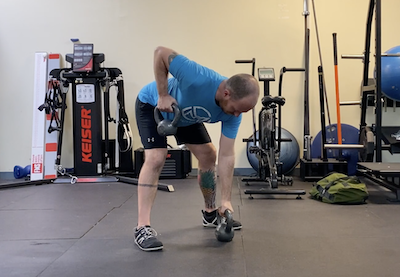
- Hinge at the hips by pushing them back while keeping your spine long.
- Drive through your feet to extend the hips and stand tall with control.
- Avoid shrugging the shoulders or leaning back as you finish.
- Repeat for the desired number of reps.
Common Mistakes
- Bending through the spine instead of hinging at the hips
- Letting knees shift too far forward
- Hyperextending the low back at the top
- Losing control of the handle or band tension
- Rushing the movement without maintaining posture
Progressions and Regressions
- Regression: Shorten the distance from the anchor to reduce tension
- Regression: Use a lighter weight or resistance band
- Progression: Increase load to challenge hip strength
- Progression: Pause at the top and focus on glute contraction
- Advanced: Add tempo work by slowing the lowering phase